
When it comes to event merchandise, timing and coordination can really make a difference. This project with our client, Mike Ritchie from Browzer Company, is a great example of how clear communication, flexibility, and quick problem-solving can turn a tight deadline into a successful outcome.
Mike, who is based in the United Kingdom, reached out to us with an enquiry for custom notebook merchandise for his upcoming event in Adelaide, Australia, starting on 4 May. The brief was simple but time-sensitive—he needed bright, eye-catching notebooks ready in time for the event launch.
From the outset, we knew this would require close coordination. With Mike in the UK and the event taking place in Adelaide, the time difference made email communication a little slower than ideal. Getting quick alignment on details took some effort, especially with the urgency of the deadline. On top of that, the turnaround time was very tight. The notebooks needed to be designed, approved, produced, and delivered in time for 4 May, leaving very little room for delays.
This is where Quickmerch stepped in to help make the process easier and more efficient. We began coordinating with Mike via Teams chat alongside email, which significantly sped up approvals and allowed us to lock in key details much faster despite the time difference.
Mike requested bright-coloured notebooks for the event, along with a customised design that would contrast strongly against the notebook colours. To support his budget while still delivering on quality and design, we also provided a more cost-effective option that didn’t compromise the overall look and feel he was after.
This flexible approach helped streamline approvals and kept the project moving smoothly through production
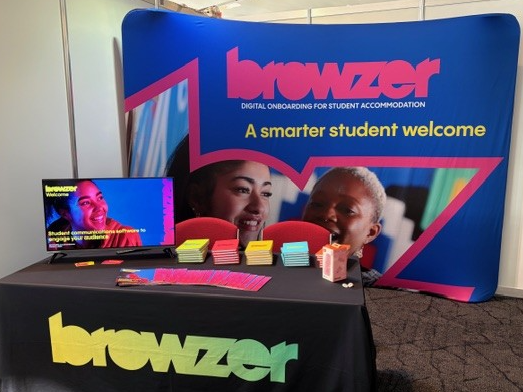
Despite the short lead time and coordination challenges, we successfully completed the order and arranged delivery directly to Mike’s accommodation in Adelaide, Australia, ensuring the notebooks were ready for him ahead of the event. The final result was a set of vibrant, bright-coloured notebooks with customised designs that stood out perfectly at the event. Mike even kindly sent through a photo of their merch stand, which was great to see the notebooks in place and being used on the day. After receiving the delivery, Mike shared his feedback:
“Hi Eds. Thanks for checking in. The notebooks arrived this morning, and they look fantastic! Thank you very much for all your help with this. Here’s a pic of them on our stand.”

This project is a great reminder that even with tight deadlines and time zone challenges, good communication and flexibility go a long way. By staying responsive and solution-focused, we were able to support Mike Ritchie from Browzer Company and deliver a product that met expectations on time and without compromise. We’re glad to have been part of their event in Adelaide and look forward to supporting more projects like this in the future.
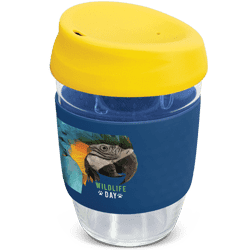 This production method is a CMYK+W digital branding process designed specifically for silicone surfaces.
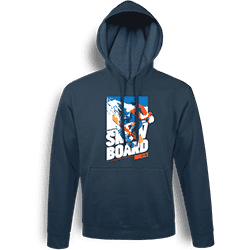 Colourflex transfers are a CMYK+W digital print process, used for branding apparel and fabrics.
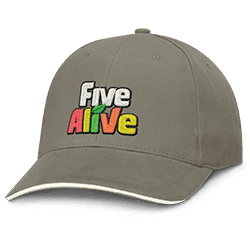 Embroidery is an excellent way of branding bags, apparel, and other textile products. It offers higher perceived value and a depth of branding quality which other processes cannot match. Embroidery uses rayon thread which is stitched into the product and has a slightly raised effect.
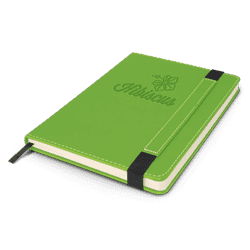 Commonly referred to as ‘Blind’ debossing, a heated custom metal plate is pressed firmly onto the product leaving an impression of the artwork. Thermo debossing is also available on certain products, using additional heat to create a unique and eye-catching two-tone finish.
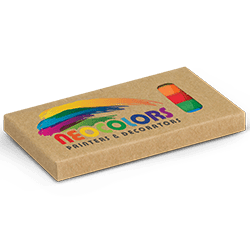 Direct digital printing involves the transfer of ink directly from the print heads of an inkjet machine to the product and can be used to produce both full colour and closely matched spot colour branding on flat or slightly curved surfaces.
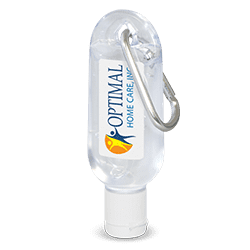 Digital adhesive labels are used to brand products that cannot be branded with any other method. They are printed with a digital printing press and applied to the product.
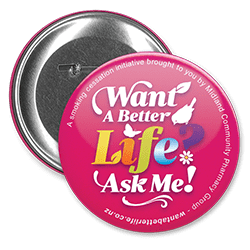 This production method is used for printing media such as paper, vinyl and magnetic material used in the manufacture of labels, badges, and fridge magnets etc. This printing process uses CMYK values.
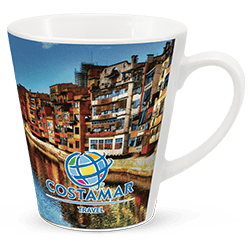 Dye sublimation print is used for branding products that have a special coating on them, or fabrics suitable for the sublimation process. A transfer is produced by printing sublimation ink onto transfer paper and then heat pressing it onto the product.
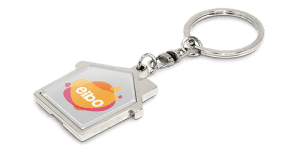 This CMYK branding process is produced by printing artwork onto a vinyl material with strong adhesive on the reverse. The branded area is then coated with a crystal-clear resin. Once dry, the finished decal is applied to the product and the adhesive forms a permanent bond.
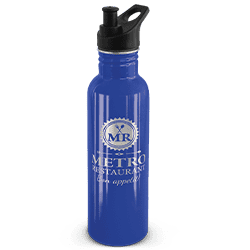 Laser engraving is a permanent branding process that engraves artwork into the surface of the product using a laser. Different materials produce different engraving finishes, to avoid uncertainty pre-production samples are recommended.
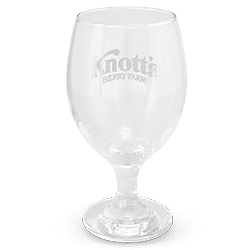 Imitation etch is a special pad printing ink used for producing an etch-like effect on glass products.
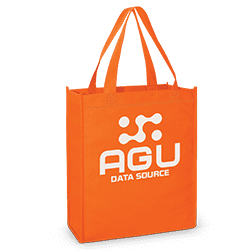 Flatbed Screen Printing is achieved by forcing ink through a fine mesh screen with a squeegee onto the product and is ideal for branding flat objects.
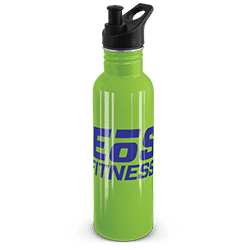 Rotary Screen Printing is achieved by forcing ink through a fine mesh screen with a squeegee onto the product and is ideal for cylindrical objects.
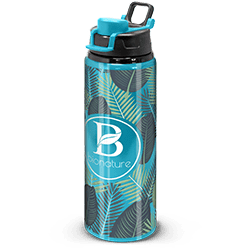 Direct to product rotary digital printing involves the transfer of UV ink directly from inkjet print heads and can be used to produce detailed artwork using both closely matched spot colours and full colour branding.
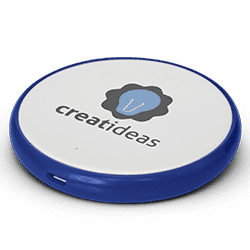 Pad printing uses a silicone pad to transfer an image to a product from a laser etched printing plate. It is one of the most popular and affordable ways of branding promotional products due to its ability to reproduce images on uneven or curved products and print multiple colours in a single pass.