
Privacy Policy
Last updated: February 2, 2026
Who we are
Our website address is https://quickmerch.com.au .
What personal data we collect and why we collect it
Comments
When visitors leave comments on the site we collect the data shown in the comments form, and also the visitor’s IP address and browser user agent string to help spam detection.
An anonymized string created from your email address (also called a hash) may be provided to the Gravatar service to see if you are using it. The Gravatar service privacy policy is available here: https://automattic.com/privacy/. After approval of your comment, your profile picture is visible to the public in the context of your comment.
Media
If you upload images to the website, you should avoid uploading images with embedded location data (EXIF GPS) included. Visitors to the website can download and extract any location data from images on the website.
Contact forms
We collect information you provide to respond to inquiries and may retain correspondence for records.
Cookies
If you leave a comment on our site you may opt-in to saving your name, email address and website in cookies. These are for your convenience so that you do not have to fill in your details again when you leave another comment. These cookies will last for one year.
If you visit our login page, we will set a temporary cookie to determine if your browser accepts cookies. This cookie contains no personal data and is discarded when you close your browser.
When you log in, we will also set up several cookies to save your login information and your screen display choices. Login cookies last for two days, and screen options cookies last for a year. If you select "Remember Me", your login will persist for two weeks. If you log out of your account, the login cookies will be removed.
If you edit or publish an article, an additional cookie will be saved in your browser. This cookie includes no personal data and simply indicates the post ID of the article you just edited. It expires after 1 day.
Embedded content from other websites
Articles on this site may include embedded content (e.g. videos, images, articles, etc.). Embedded content from other websites behaves in the exact same way as if the visitor has visited the other website.
These websites may collect data about you, use cookies, embed additional third-party tracking, and monitor your interaction with that embedded content, including tracking your interaction with the embedded content if you have an account and are logged in to that website.
Analytics
Who we share your data with
How long we retain your data
If you leave a comment, the comment and its metadata are retained indefinitely. This is so we can recognize and approve any follow-up comments automatically instead of holding them in a moderation queue.
For users that register on our website (if any), we also store the personal information they provide in their user profile. All users can see, edit, or delete their personal information at any time (except they cannot change their username). Website administrators can also see and edit that information.
What rights you have over your data
If you have an account on this site, or have left comments, you can request to receive an exported file of the personal data we hold about you, including any data you have provided to us. You can also request that we erase any personal data we hold about you. This does not include any data we are obliged to keep for administrative, legal, or security purposes.
Where we send your data
Visitor comments may be checked through an automated spam detection service.
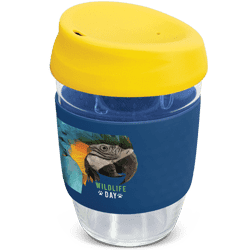 This production method is a CMYK+W digital branding process designed specifically for silicone surfaces.
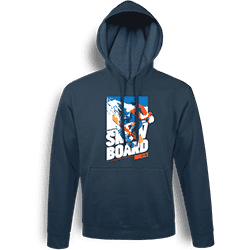 Colourflex transfers are a CMYK+W digital print process, used for branding apparel and fabrics.
 Embroidery is an excellent way of branding bags, apparel, and other textile products. It offers higher perceived value and a depth of branding quality which other processes cannot match. Embroidery uses rayon thread which is stitched into the product and has a slightly raised effect.
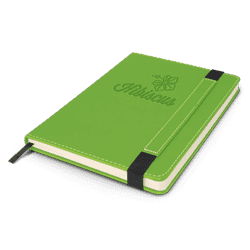 Commonly referred to as ‘Blind’ debossing, a heated custom metal plate is pressed firmly onto the product leaving an impression of the artwork. Thermo debossing is also available on certain products, using additional heat to create a unique and eye-catching two-tone finish.
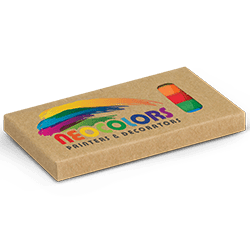 Direct digital printing involves the transfer of ink directly from the print heads of an inkjet machine to the product and can be used to produce both full colour and closely matched spot colour branding on flat or slightly curved surfaces.
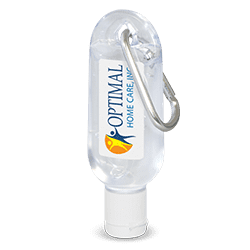 Digital adhesive labels are used to brand products that cannot be branded with any other method. They are printed with a digital printing press and applied to the product.
 This production method is used for printing media such as paper, vinyl and magnetic material used in the manufacture of labels, badges, and fridge magnets etc. This printing process uses CMYK values.
 Dye sublimation print is used for branding products that have a special coating on them, or fabrics suitable for the sublimation process. A transfer is produced by printing sublimation ink onto transfer paper and then heat pressing it onto the product.
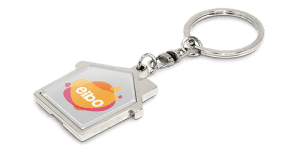 This CMYK branding process is produced by printing artwork onto a vinyl material with strong adhesive on the reverse. The branded area is then coated with a crystal-clear resin. Once dry, the finished decal is applied to the product and the adhesive forms a permanent bond.
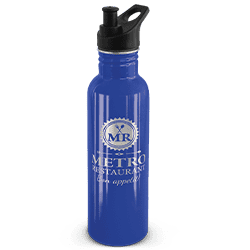 Laser engraving is a permanent branding process that engraves artwork into the surface of the product using a laser. Different materials produce different engraving finishes, to avoid uncertainty pre-production samples are recommended.
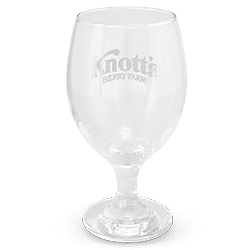 Imitation etch is a special pad printing ink used for producing an etch-like effect on glass products.
 Flatbed Screen Printing is achieved by forcing ink through a fine mesh screen with a squeegee onto the product and is ideal for branding flat objects.
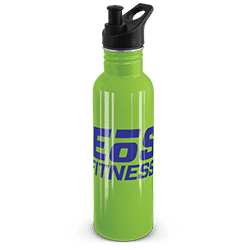 Rotary Screen Printing is achieved by forcing ink through a fine mesh screen with a squeegee onto the product and is ideal for cylindrical objects.
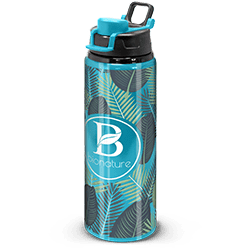 Direct to product rotary digital printing involves the transfer of UV ink directly from inkjet print heads and can be used to produce detailed artwork using both closely matched spot colours and full colour branding.
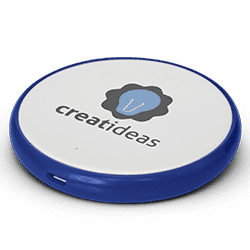 Pad printing uses a silicone pad to transfer an image to a product from a laser etched printing plate. It is one of the most popular and affordable ways of branding promotional products due to its ability to reproduce images on uneven or curved products and print multiple colours in a single pass.